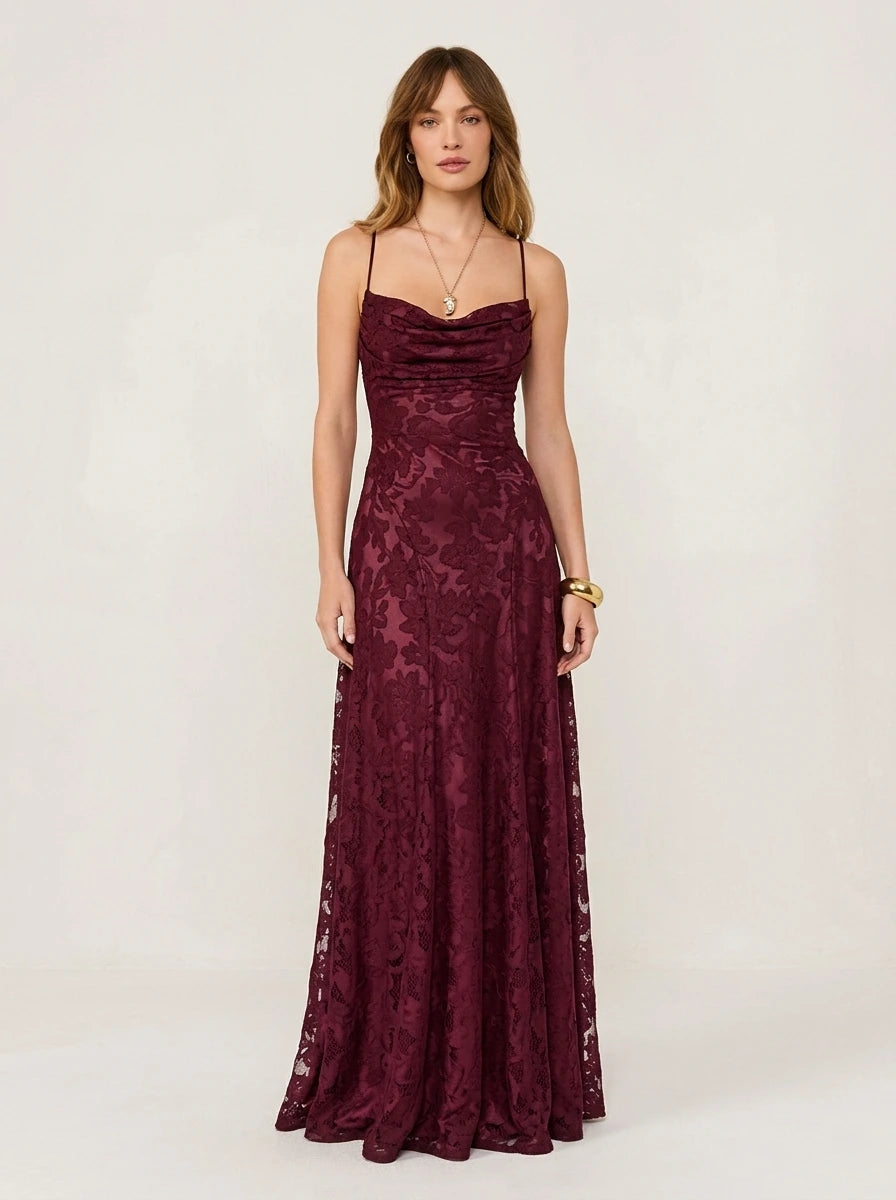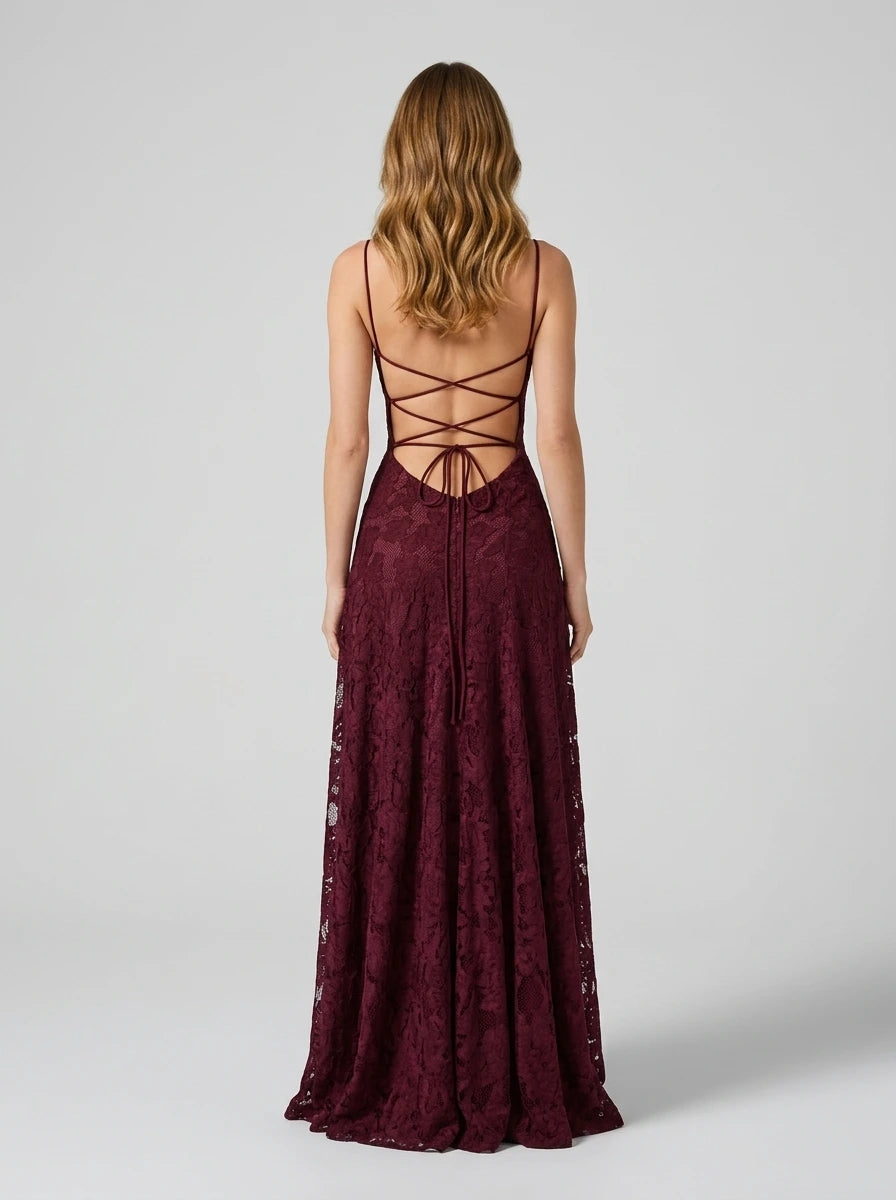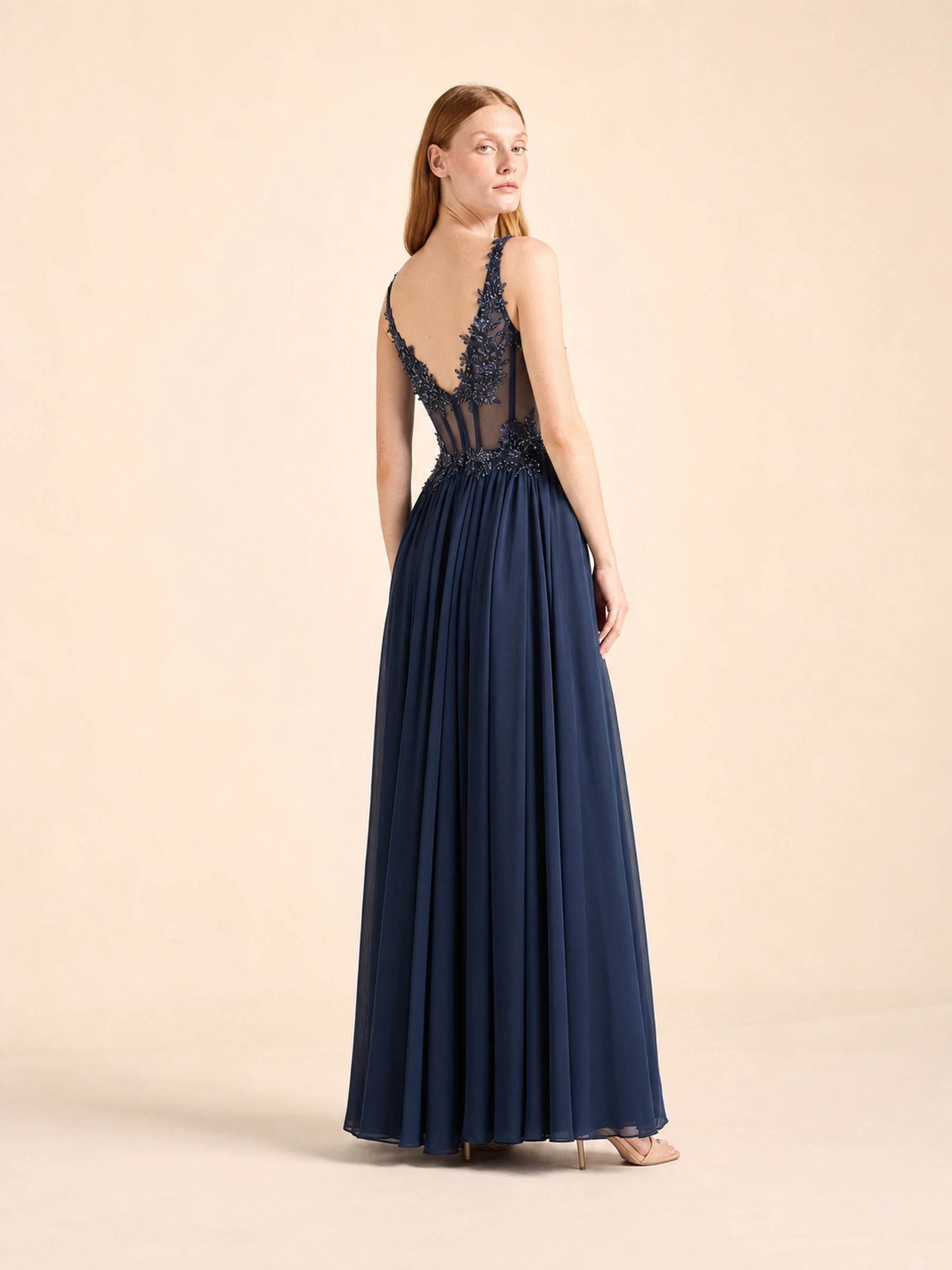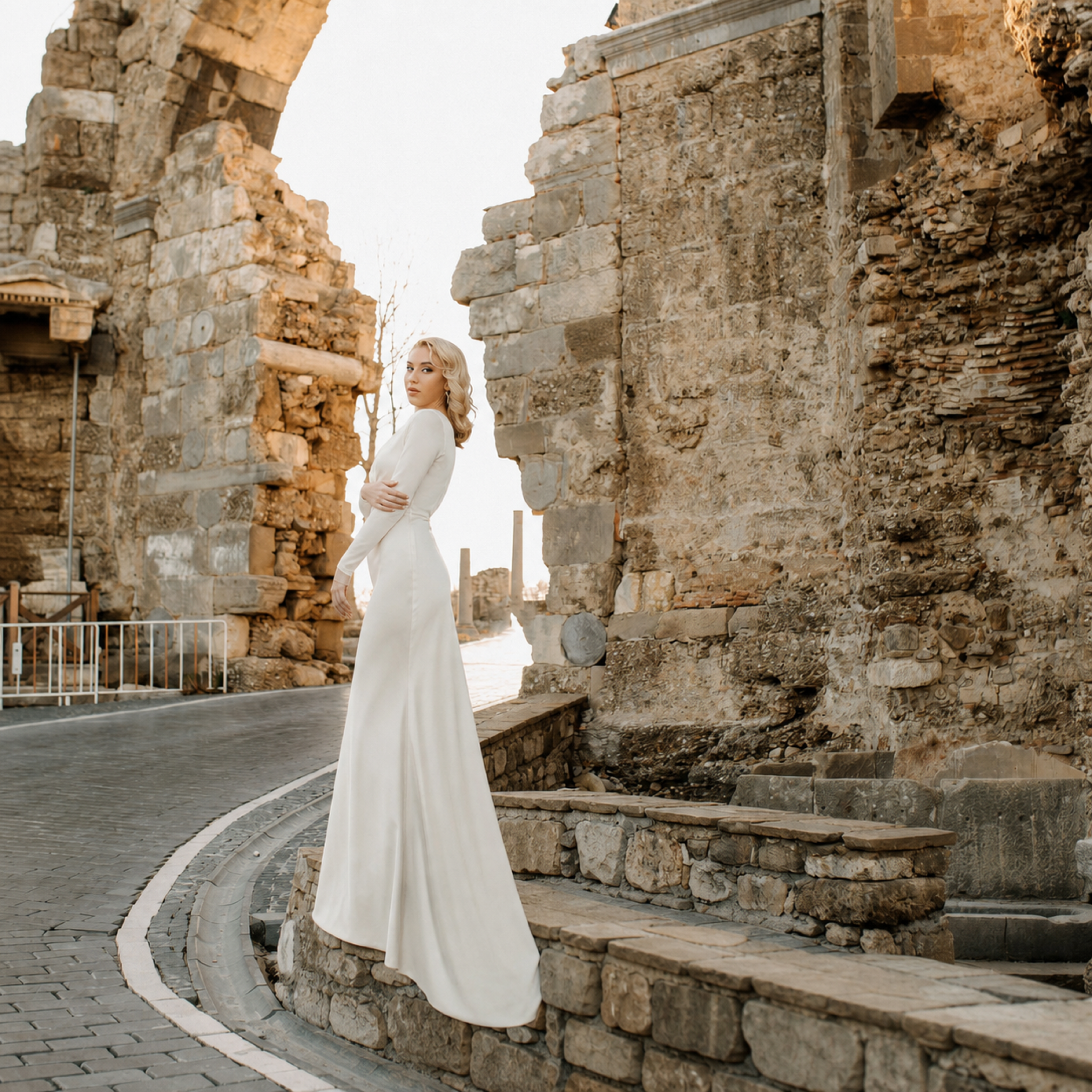
Tall Guest, Long Hem: Choosing a Full-Length Occasion Dress
For a formal invitation, the question is often less “is it a maxi?” and more “where will the hem actually land once I have shoes on?” A product’s listed length is a useful starting point, but it is not a promise of a particular finish on every body. The most practical way to decide is to compare it with a full-length dress you already know and love.

Start with a dress that gives you a useful reference
Choose a full-length dress whose hem you know well: perhaps one that sits where you want it with your usual event shoes. Lay it flat and note the length in the way that makes sense for your own wardrobe. Then compare that number with the size-specific measurement on the product page. It will not remove every variable, but it is a clearer decision than relying on the word “maxi” alone.
Leave room for the details of the event. A higher heel changes the relationship between you and the hem; a sweep train is designed to extend behind the wearer rather than finish at the ankle. If you are between sizes, check the current size chart rather than assuming that the length changes in the same way as the width.
Three listed lengths to compare before you order
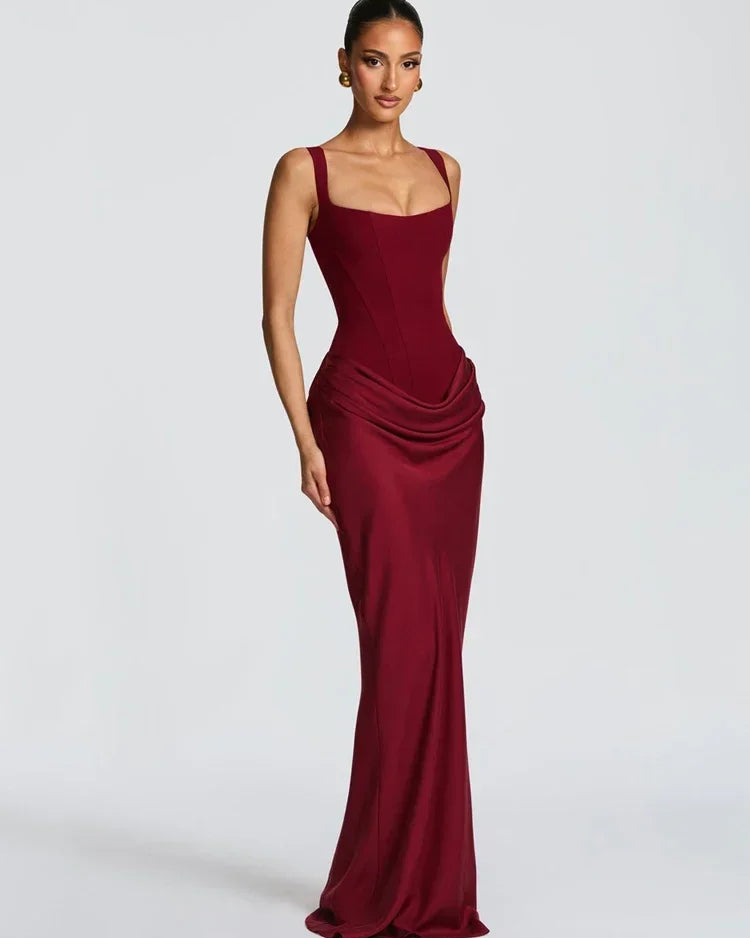
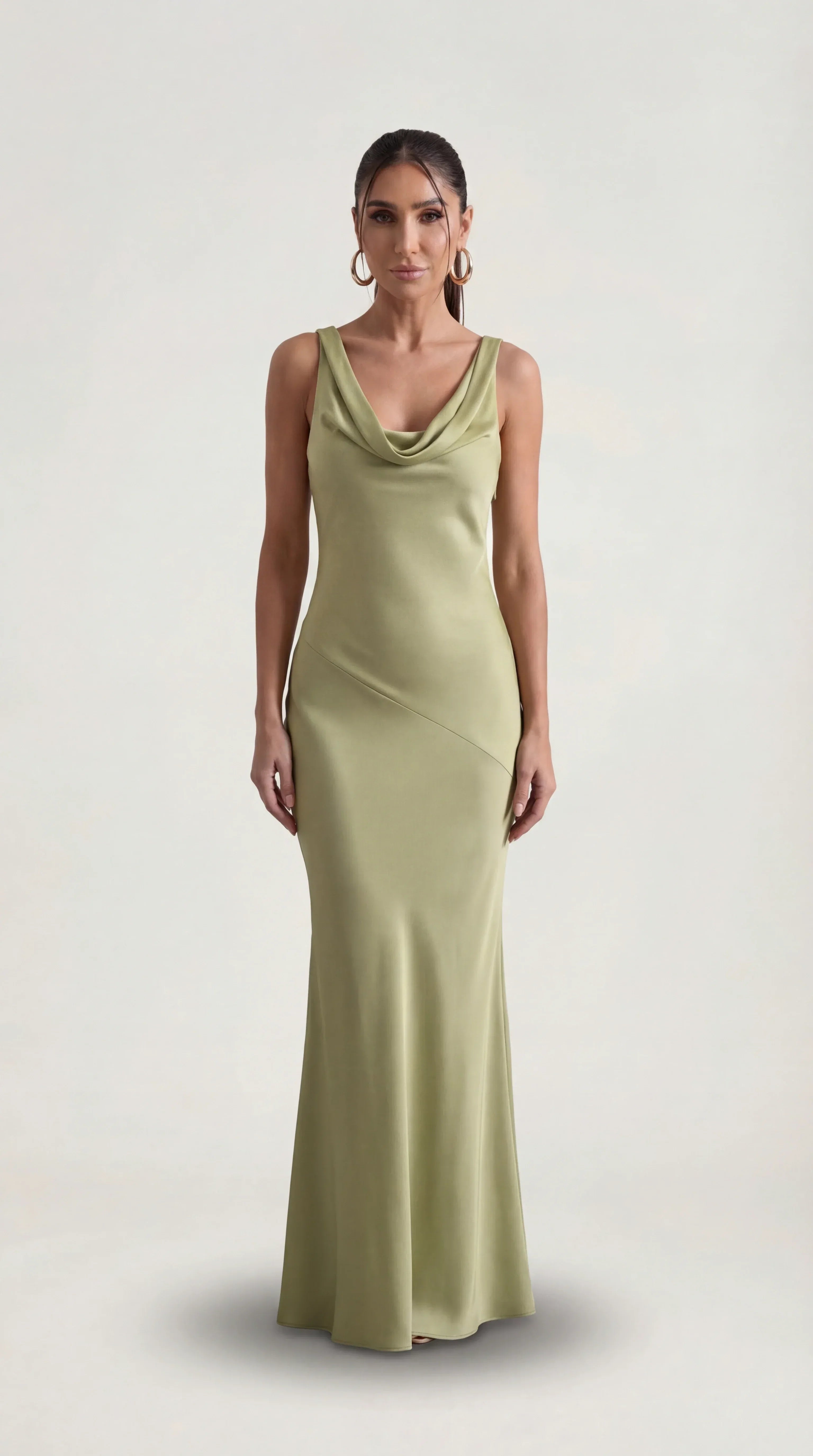
For the longest listed range: Scarlett
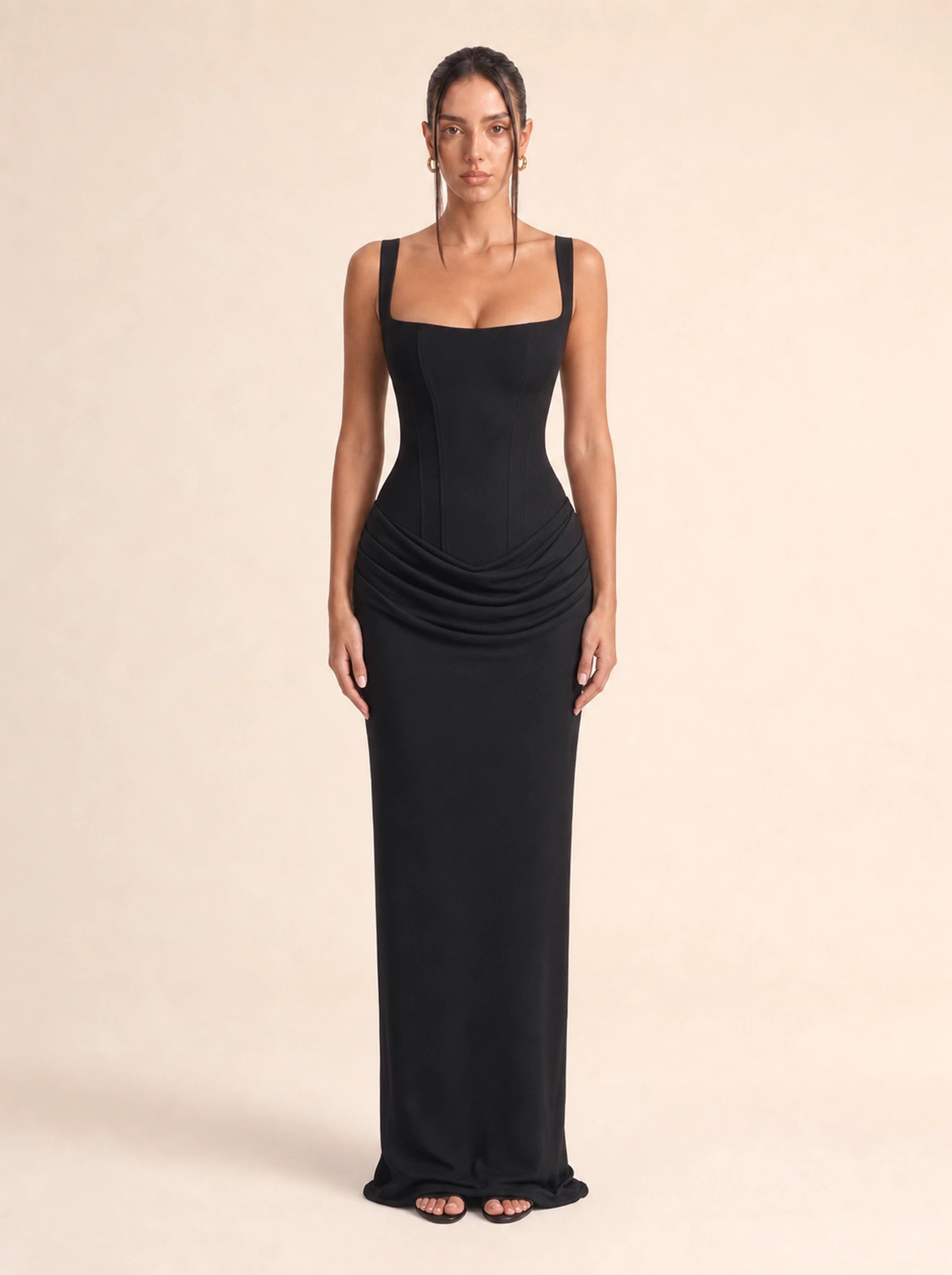
The Satin Maxi Dress Scarlett Rose currently lists lengths of 160 cm, 161 cm, 162 cm and 163 cm across S–XL. That gives you a specific range to set beside your own reference dress. Treat it as a garment measurement, not a prediction of where the hem will fall on you.

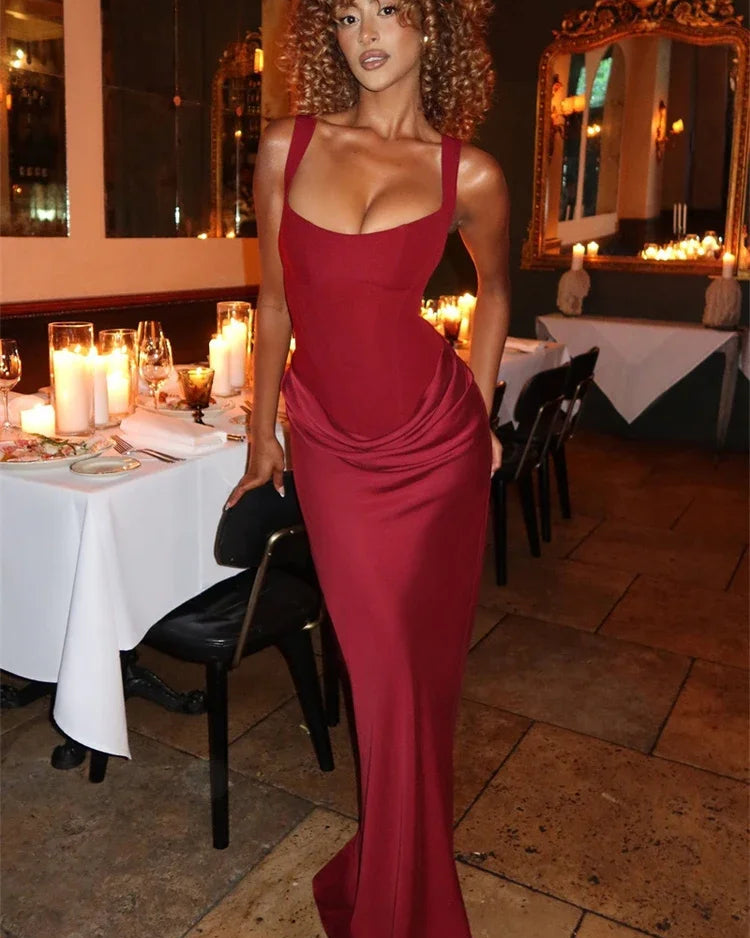
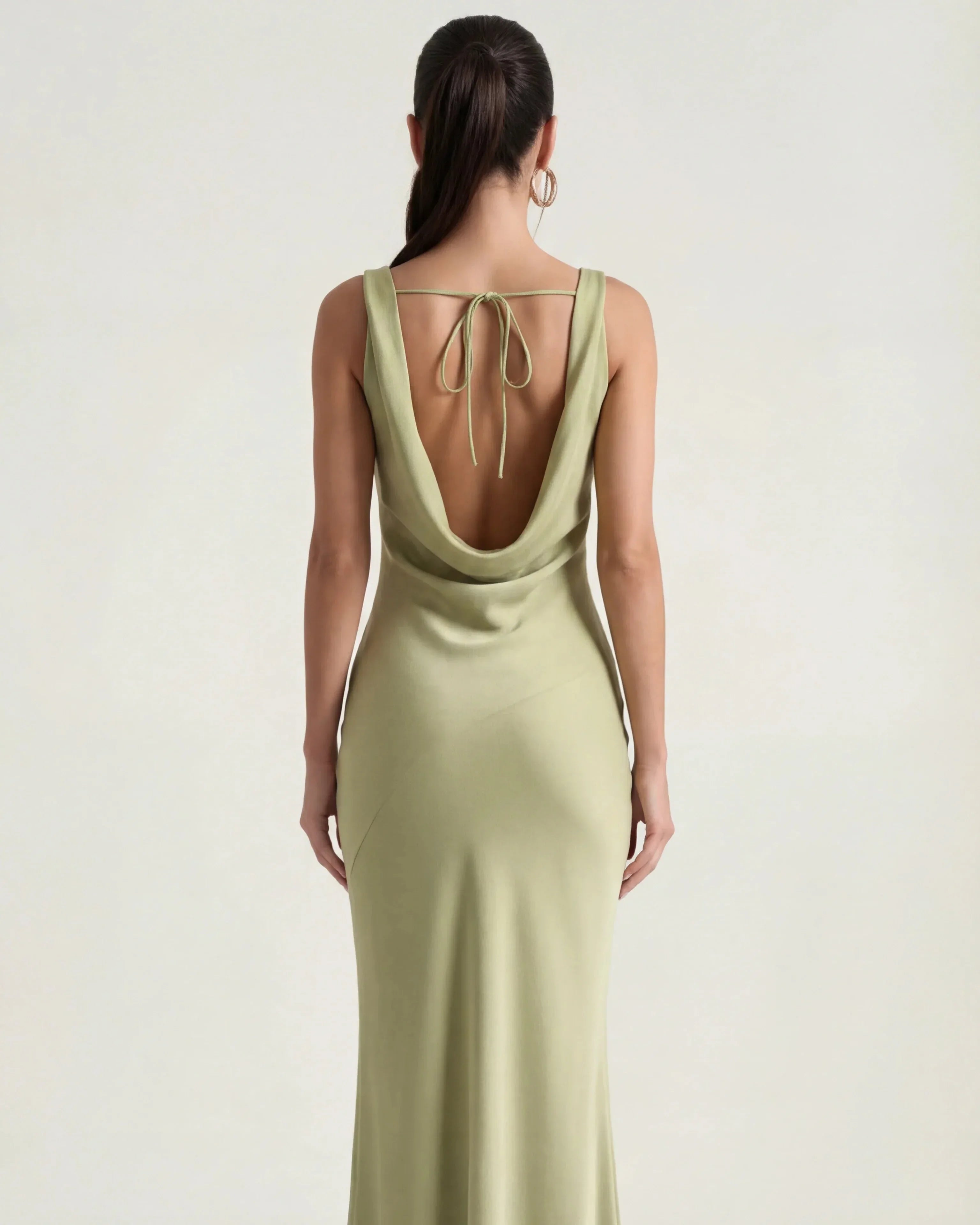
For a closer maxi comparison: Celeste
The Satin One Shoulder Maxi Dress Celeste Rose currently lists 149 cm for S, 151 cm for M and 153 cm for L. If you are deciding between two evening looks, putting those figures next to your own known dress is more useful than treating both products as interchangeable simply because each is described as a maxi.
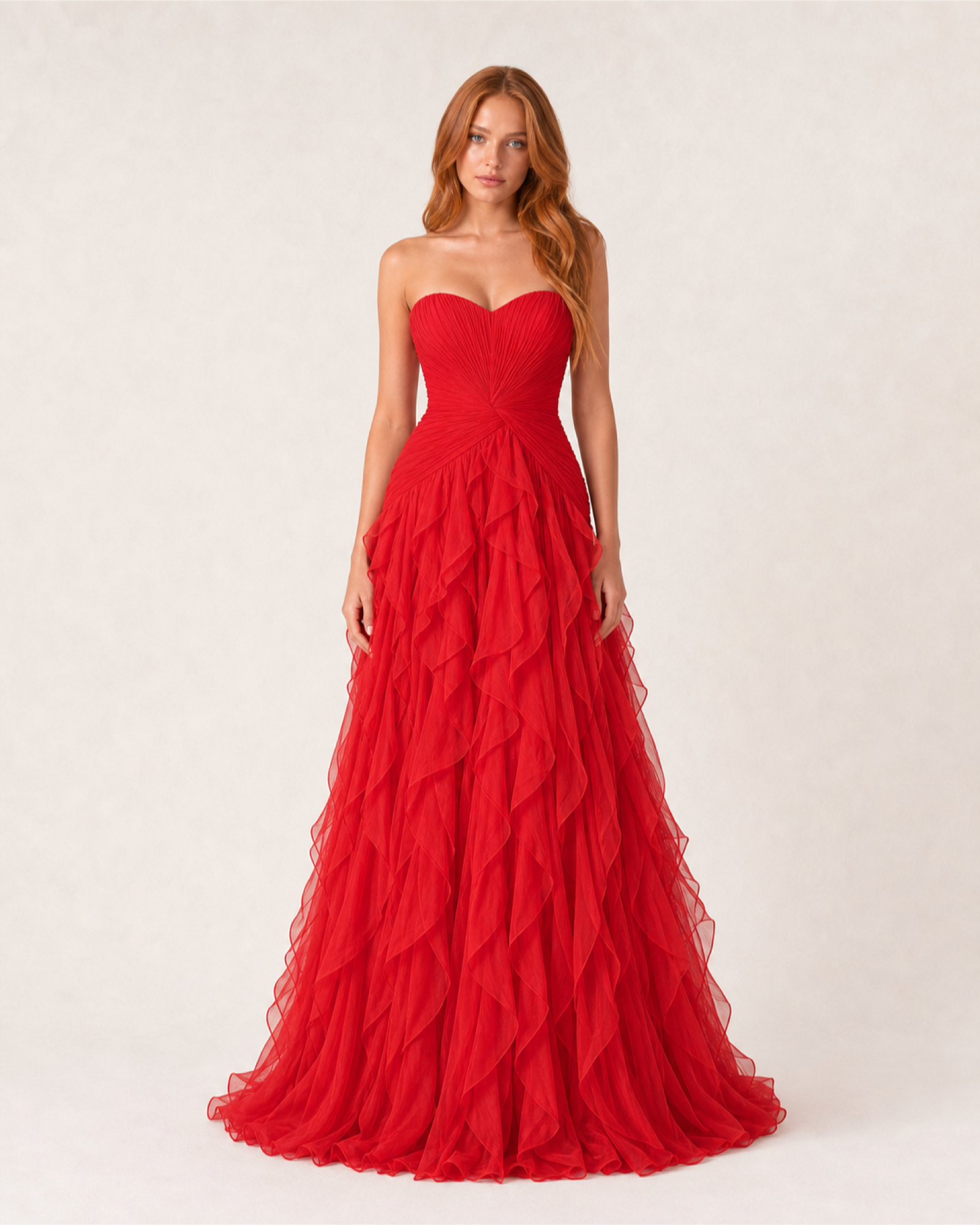
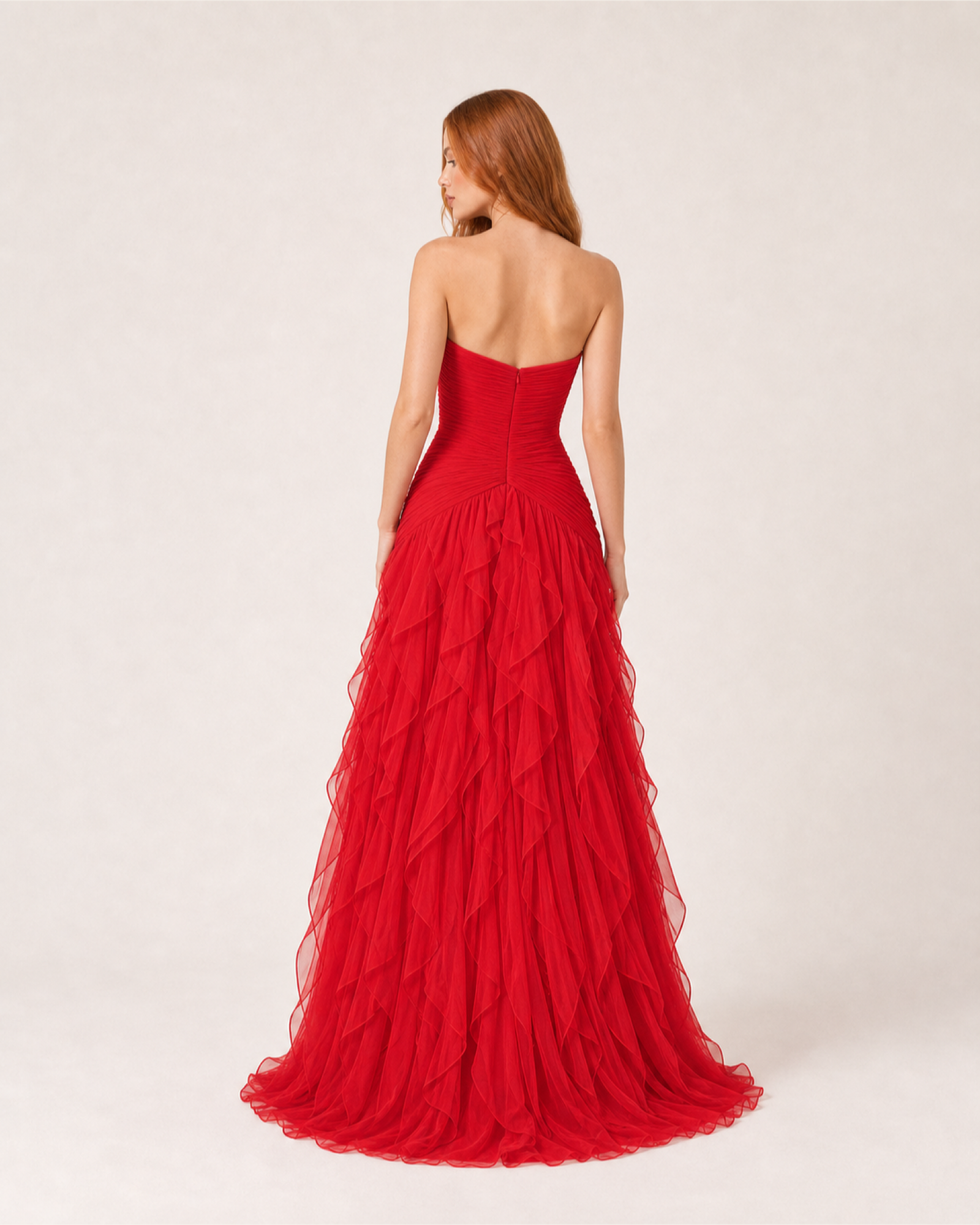
For an A-line gown with a sweep train: Isabeau
The Satin A-Line Prom Gown Isabeau Rose currently lists 147–155 cm across S–XL. Its product description also identifies a sweep train, so consider the intended back length as part of the overall silhouette when you compare it with a straight-hem dress from your wardrobe.

A calm check before the event
Once your dress arrives, try it on with the shoes you are most likely to wear and take a few steps on a clean indoor floor. That gives you time to decide whether the look works for the setting, whether a different heel feels more comfortable, or whether you would prefer a professional alteration. For an especially important event, do this early rather than the night before.
Quick checklist
- Compare the exact size’s listed length with a full-length dress you already own.
- Factor in your intended footwear.
- Read the current size chart and product description before ordering.
- For a train, assess the front hem and the back separately.
- Try the dress with shoes ahead of the occasion.
Frequently asked questions
Does “maxi” guarantee a floor-length finish?
No. “Maxi” describes a style category, while the outcome on you depends on the listed garment measurement, the size selected, your proportions and your footwear. Compare the current size chart with a known dress where possible.
Should I use the same comparison for a gown with a train?
Use the listed length as a starting point, then consider the train separately. A train is intended to extend behind the wearer, so a straight-hem reference dress cannot tell the whole story.